
 .
.
Replacing your AC is easy to put off—but how do you know when it’s time?
If you’re like most homeowners in Georgia’s Piedmont region, your air conditioning system is easy to forget about—until it struggles to keep up during the peak of summer. And in Georgia, that heat and humidity can put your system to the test fast.
The challenge is knowing when to replace your AC system before it completely breaks down. Replace it too early, and you may spend money you didn’t need to. Wait too long, and you could find yourself without cooling when you need it most.
Here’s a simple, no-pressure guide to help you recognize the signs, understand your options, and make the best decision for your home.
Signs It May Be Time to Replace your AC System
1. Your System is 10 – 15+ Years Old
Most AC systems last between 10 and 15 years. If yours is getting close to that range—or past it—it may still be running, but it’s likely not operating efficiently, where AC systems run hard for long stretches, older units tend to wear down faster and become less reliable.
2. You’re Calling for Repairs More Often
Occasional repairs are normal. But if you’ve noticed multiple service calls over the past year, it could be a sign your system is nearing the end of its lifespan.
Those repair costs can quietly add up—sometimes making replacement the smarter long-term decision.
3. Your Energy Bills Are Increasing
If your energy bills are rising but your usage hasn’t changed, your AC system could be losing efficiency.
Older systems have to work harder to cool your home, especially during Georgia’s hot, humid summers. That extra strain shows up in your monthly utility costs.
4. Your Home Doesn’t Feel Comfortable
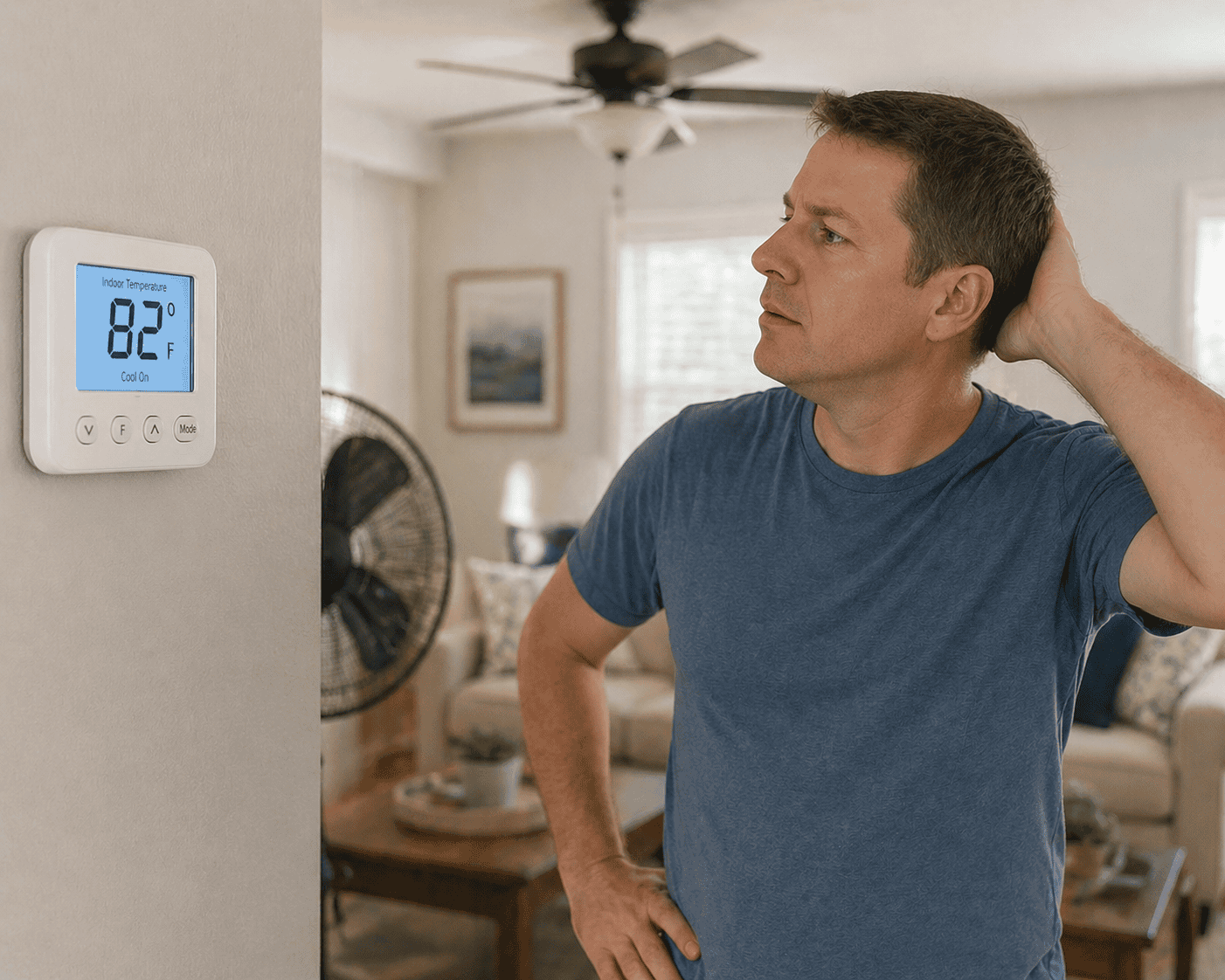
Hot spots, uneven cooling, or weak airflow are all signs your system may be struggling.
If certain rooms never seem to reach the right temperature—or your system runs constantly without keeping up—it may be time to evaluate whether your AC can still meet your home’s needs.
5. Strange Noises or Odors
Grinding, banging, rattling, or unusual smells aren’t normal.
Sometimes these are simple fixes—but they can also signal deeper issues that may not be worth repairing in an older system.
6. Your System Uses R-22 Refrigerant
Older systems may rely on R-22 refrigerant, which has been phased out. That makes it more expensive and harder to source.
If your system develops a refrigerant issue, the cost to repair it could push you toward replacement.
When Repairing Your AC System Still Makes Sense
Not every problem means it’s time for a new system.
If your AC is under 10 years old, has been well maintained, and the repair is minor, it usually makes sense to fix it.
A helpful guideline:
If a repair costs less than 30–50% of the price of a new system—and your system still has life left—repairing is often the right choice.
The key is getting honest input early so you can make an informed decision without pressure.
Benefits Of Replacing Your AC System
Planning Ahead vs. Emergency Replacement
One of the biggest advantages of recognizing these signs early is avoiding a last-minute decision.
If your system fails during a heat wave, you may feel rushed into replacing it quickly. Planning ahead gives you time to:
Compare options
Explore energy-efficient upgrades
Take advantage of seasonal promotions
Schedule installation on your timeline
It also gives you peace of mind knowing your home will stay comfortable when temperatures rise.
At Patterson, It's Simple
If your AC system is still keeping your home comfortable and isn’t requiring frequent repairs, there’s no need to rush into replacing it. Many systems can continue providing reliable comfort for years with routine maintenance and occasional repairs.
However, if you’re noticing a pattern of higher energy bills, more frequent repairs, or uneven cooling, it may be time to start considering your options. Waiting rarely makes a replacement less expensive, and no one wants to be without air conditioning during a hot Georgia summer.
Even if you’re not ready to replace your system today, a professional inspection can help you understand its condition, plan ahead, and avoid unexpected breakdowns.